How I Built a SaaS Product in 3 Days Without a Co-Founder
Building a SaaS product from scratch is a monumental task. Doing it solo in three days without a co-founder requires a tactical breakdown of decisions, tradeoffs, and relentless focus. This isn't a diary entry; it's the story of Shotframe, a product I designed, built, and shipped rapidly. This is the article indie hackers share and startup founders read before deciding to hire me.
Why I Built It: Solving a Real Problem
The idea for Shotframe emerged from a clear problem I observed in the indie hacker and vibe coder community: a bottleneck at launch. Developers could build functional apps quickly but struggled to create professional marketing assets. I saw an opportunity to bridge that gap, providing a tool that allows builders to present their work with the same polish they put into their code.
The 72-Hour Sprint: What I Built, Skipped, and Regretted
My approach was to build the absolute minimum viable product (MVP) and iterate. Every day was a sprint, focused on delivering a core piece of functionality.
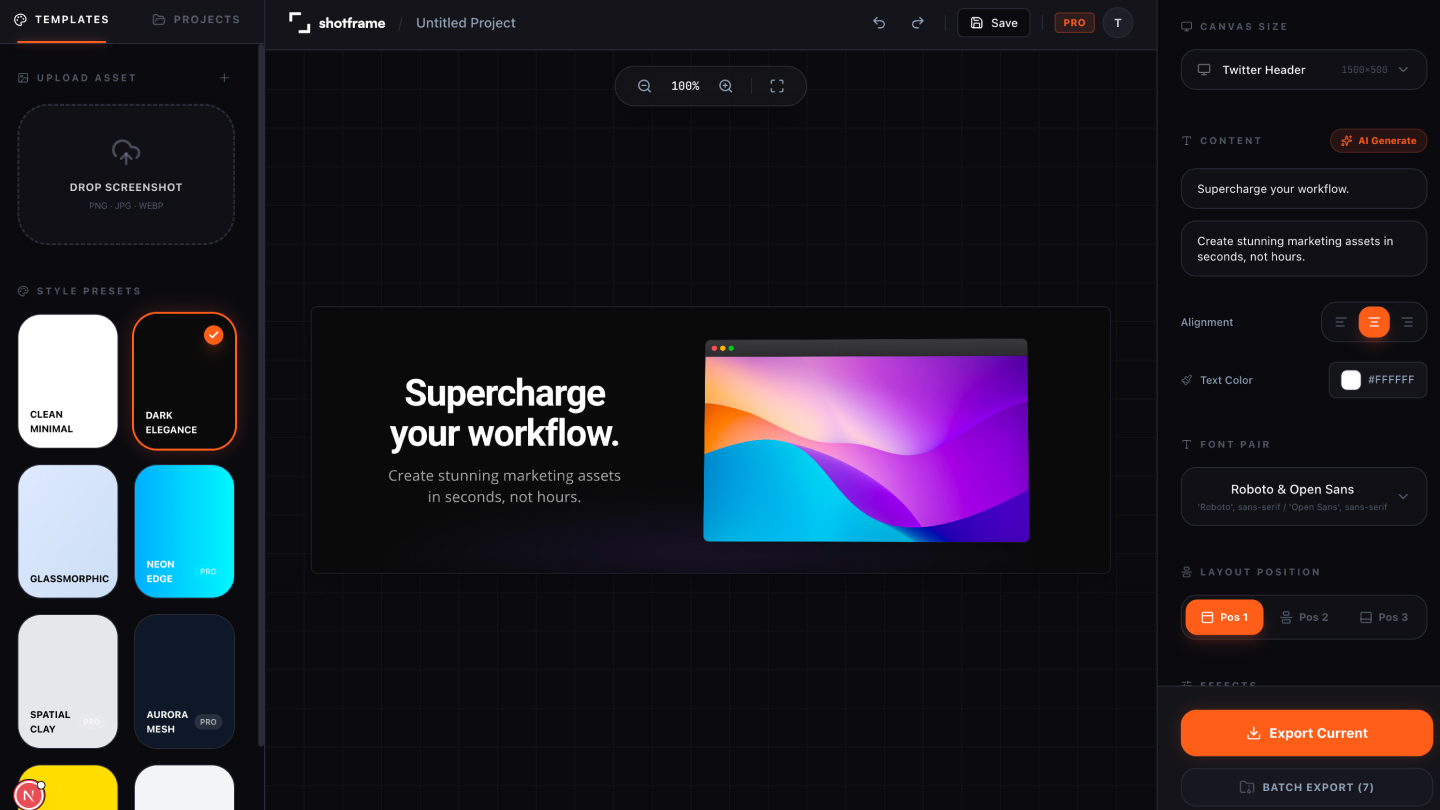
- Day 1: Core Functionality & Canvas: The first day was dedicated to the core engine: the Fixed Virtual Canvas system. I skipped complex user authentication initially, opting for a simpler, email-based login.
- Day 2: Templates & Export: Once the core canvas was stable, I focused on building out a template system and the export functionality. I skipped advanced customization options for templates, focusing strictly on a curated set.
- Day 3: Payments & Marketing: The final day was about monetization and getting ready for launch. Integrating Stripe for payments and building the marketing site were the immediate priorities.
The Hardest Technical Problem: Fixed Virtual Canvas
The most challenging technical hurdle was the Fixed Virtual Canvas system. The goal was to allow users to upload any screenshot, select any device frame, and have the screenshot automatically scale and position correctly within that frame, regardless of aspect ratio.
- Dynamic Aspect Ratio Calculation: Accurately calculating how to fit a source image into a target frame while preserving its aspect ratio and allowing for cropping or padding.
- Real-time Previews: Ensuring that all adjustments were reflected in real-time without lag to provide a smooth user experience.
- Cross-Device Consistency: The system needed to work flawlessly across desktop and mobile browsers.
Design Decisions: Multi-Step Flow for Clarity

From a UX perspective, I opted for a multi-step flow rather than a single, overwhelming page. Breaking the process into distinct steps (Upload, Choose Template, Customize, Export) made it feel less daunting. Each step had a clear goal, allowing users to focus on one task at a time.
Tools That Saved Me
My solo, high-velocity journey was significantly accelerated by key tools:
- Claude Code & Cursor: Used for scaffolding components, debugging, and refactoring, acting as a constant pair programmer directly in my IDE.
- v0 by Vercel: Used for generating UI starting points and exploring different component ideas quickly.
- Next.js, Tailwind CSS & Vercel: Provided a seamless development and deployment experience, allowing me to focus on product rather than infrastructure.
Conclusion
Building Shotframe solo in three days was an intense experience. It proved that with a clear vision, a tactical approach, and the right tools, one person can design it, build it, and ship a production-ready SaaS product incredibly fast. It's a testament to the power of focused execution and the elimination of unnecessary handoffs.